
Bali Yacht Charter Weather: What Happens When the Sea Changes?
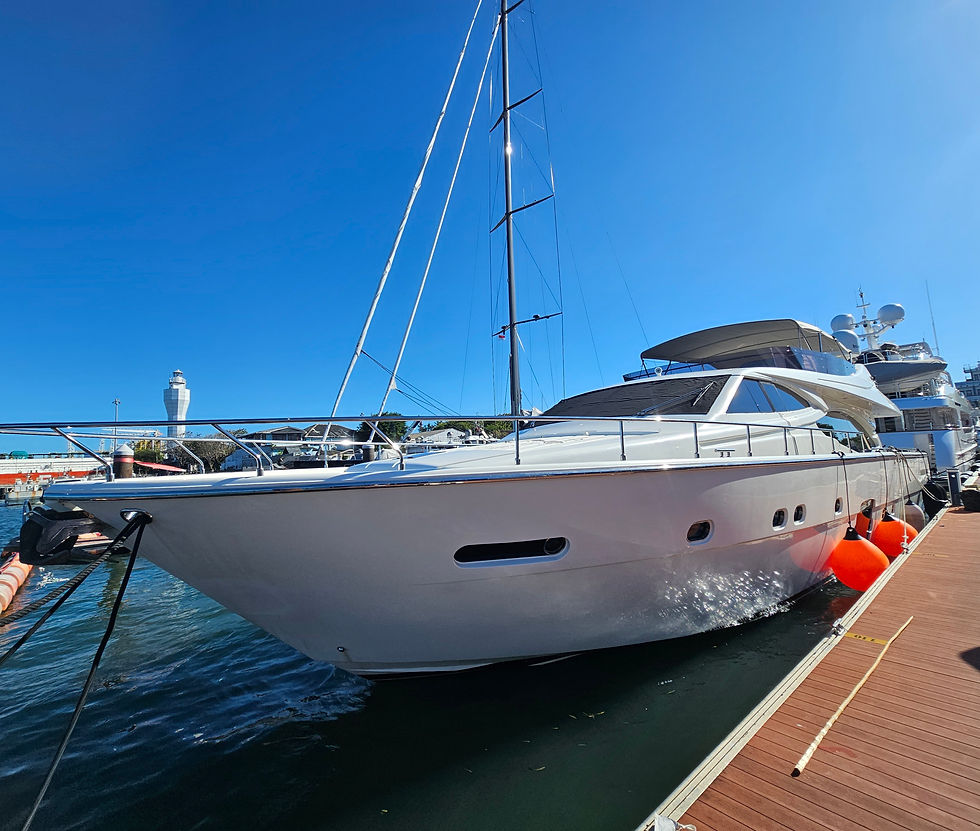
Planning a yacht charter in Bali is different from planning a restaurant dinner.
A restaurant can usually operate despite rain.
A yacht has to work with the ocean.
That means weather and sea conditions are not just background information. They are part of the operational planning.
Bali doesn't have “bad yacht months”
Bali has broadly defined wet and dry seasons, but the ocean does not follow a simple on/off calendar.
BMKG explains that Indonesia's seasons are influenced by monsoon patterns and that the beginning of the dry and wet seasons can vary from their climatological averages.
So:
Dry season does not mean guaranteed sunshine.
And:
Wet season does not mean guaranteed rain.
What matters for a yacht charter is the actual forecast.
Land weather isn't enough
One of the biggest mistakes guests make is checking a weather application and seeing:
“30°C, partly cloudy.”
That doesn't tell you everything you need to know.
A marine operator also needs to consider:
Wind speed
Wind direction
Wave height
Currents
Visibility
Rain
Thunderstorms
Sea state
BMKG's marine forecast for Nusa Penida, for example, provides wind, waves, currents, visibility and tidal information in addition to basic weather.
That's much more useful for deciding what is appropriate on the water.
What happens if the weather changes?
The first principle should always be:
Safety comes before the itinerary.
If conditions change, the captain and operational team may adjust:
Route
Speed
Swimming locations
Snorkeling locations
Departure time
Duration at particular locations
Return timing
This is normal yacht operations.
A flexible itinerary is not a sign that something has gone wrong.
It is a sign that the trip is being managed according to the conditions actually encountered.
What about rain during a sunset cruise?
Rain does not automatically mean the entire experience is ruined.
Tropical weather can be localized.
It is possible to have rain in one part of the coastline while another area remains relatively clear.
Clouds can also create spectacular sunset colors.
The important thing is to avoid making promises that weather cannot guarantee.
No responsible operator can honestly promise:
“You will definitely have a perfect sunset.”
What an experienced operator can do is monitor conditions and make the best operational decision available.
What if the sea becomes rough?
This is where the difference between a generic boat booking and professional yacht operations becomes important.
If the sea state changes, the route may need to change.
A planned swimming stop may no longer be appropriate.
A route may be shortened.
The captain may decide to stay in more sheltered waters.
The priority is always to maintain a safe and comfortable experience rather than force an itinerary simply because it was printed on a booking confirmation.
Should you cancel because rain is forecast?
Not necessarily. Forecasts change.
A forecast several days before departure is not the same as conditions observed immediately before departure.
For this reason, guests should avoid making decisions based solely on a single weather icon on a phone.
Closer to departure, marine forecasts become much more useful.
Why experienced operators watch conditions differently
After thousands of events, you start to understand that guests often look at weather in a very simple way:
sun = good ;
rain = bad
Marine operations are more complicated.
Wind direction can matter.
Wave period can matter.
Current can matter.
Visibility can matter.
The timing of the weather can matter.
A short rain shower before sunset may have very little impact on an evening.
Strong winds and uncomfortable sea conditions can be much more important even when there is no rain.
What guests should bring
Even on a beautiful day, a yacht trip is better when you are prepared.
Bring:
Sunglasses
Sunscreen
Swimwear
A light cover-up
Waterproof protection for phones
A change of clothes
Medication if you are prone to seasickness
And for the wet season:
bring something that can get wet.
It sounds obvious, but it is surprisingly easy to forget.
The right mindset
A yacht charter is an experience on the ocean, not inside a weather-controlled building.
You cannot control the sea.
You can control how intelligently you plan around it.
That means:
Choose a sensible season.
Check the forecast.
Monitor marine conditions.
Stay flexible.
Trust the captain.
That's how professional yacht planning works.
Final thought
The best yacht operators are not the ones who promise that weather will never interfere.
They are the ones who know what to do when it does.
After more than 14 years operating yacht experiences around Bali and the surrounding islands, this is one of the most important lessons we have learned:
The ocean makes the rules. Good planning means knowing how to work with them.


Comments